Saturday, November 1, 2014

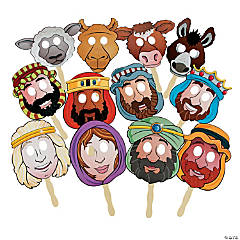
CHRISTMAS: Nativity Masks

Nativity Masks
Amazon
I don't know if I posted on this before but I discovered that the link changed so I'm going to post them again. Here are some really fun nativity masks from Oriental Trading.

They would be fantastic for your pre-k through about 2nd or 3rd grade kids and could be used for more Bible stories than just the birth of Jesus. They would be great for children's messages too!

Young kids LOVE to pretend. Let them!!

Sunday, October 26, 2014

CONFIRMATION: Create a TED-Ed lesson?!!?

Did you know TED-Ed has a lesson creation tool?  

  • Use the TED-Ed website to search of any video on YouTube.
  • Use TED-Ed to enhance the video by adding goals or objectives, add multiple choice or open ended questions, add links to other articles or resources online, or even a blog you created to give students something to think about. 
  • Use TED-Ed for online discussion. 
  • It even allows you to track their progress!

How might you use this fabulous tool? Well, if you need to be gone and still want to give your students something to think about you could use it to flip your classroom, you could prepare something for the kids to experience beforehand that you want to discuss face-to-face in class, or you could create a whole online confirmation program. If you're going to create an online course I would include face-to-face discussion time every couple of weeks to touch base. It allows for a better assessment opportunities.

Check out the video or learn more on the TED-Ed website.


Saturday, September 27, 2014

HS YOUTH: Do they or don't they? Will they or won't they?

It's been a while since I posted. I'm teaching 7/8th grades at Central Lutheran School in St. Paul and have been very busy trying to get my procedures down to something that works for all of us. But, in my quiet moments of contemplation while I walk I've been haunted by a question, "How do we keep the youth attending church into their 20's and 30's and the rest of their lives?"

The answer so far has been to "fill them up" with activities and events throughout high school. I hear people, pastors, and youth workers say, "We draw them in with activities and then share the gospel." Once, after saying that, a pastor immediately added, "It's not a bait and switch." Hmm... for some reason that has never sat well with me.

Churches put a lot of money and effort toward youth ministry as if this is the last chance these kids have, and based on polls, that may be true. Or it may not be true as we can never discount the power of the Holy Spirit in anyone's life. It is, after all, the Spirit of God who brings people to faith. It is a scary statistic, though, and it kicks some churches into action as if they're thinking, "If we grow it enough as teenagers it'll last a lifetime!" Some provide youth rooms kids can decorate however they want, whether it's black walls with flames or crazy murals (yes, I've seen both). They include game tables, video games, big screen televisions, and sometimes, coffee shops. They send them on servant events and mission trips and fully believe that the more activities the kids attend, the stronger their ties to church will become, because they will develop relationships. They also do devotions and have Bible studies... some of which are truly thought provoking and impactful. None of these things in and of themselves are bad, but the question remains: Are these the things that compel the youth to continue to go to church after they graduate?

We know that the primary reason teens come to church is because they have relationships with other teenagers. This is most certainly true. I had a very close youth group and I'm still in contact with many of them, I love them dearly and know for a fact that they are part of why I am the person that I am. They are the reason I wanted to attend church during high school. They are not, however, the reason I attended church after high school.

So, the question remains. Why do our youth stop going to church during and after college? I believe the answer to that lies somewhere between their life choices and the Holy Spirit. Many don't go while away at college because it's inconvenient, they have no transportation, and they don't even know where a church is located in relation to where they live on or near campus; but they do go when they return home during college, and afterward if they live with their parents or in the same town.

What I know for sure is that going to every youth group activity throughout high school is not what affects their church attendance as a young adult. Why?
  • Church feels different after college. The youth group and the youth room are full of kids who don't feel familiar and they don't feel they belong there anymore. 
  • Their friends have grown and changed and so have they, so they don't feel as connected as they once did. They may feel they only have memories to talk about. 
  • They may not have kept up relationships and people change a lot while they putting their identity together and you realize you don't have much in common anymore.  
  • They're making friends and developing relationships at work, so that's who they hang-out with now. 
  • They tried adult Bible study and found it less than stimulating and adult Bible study seems a place where only the pastor talks, few people ask questions, the pastor asks and answers his own questions, and/or the outline given has all the answers on it. Everybody agrees with whatever the pastor says and they all sit and nod and share how they agree; with coffee.
  • As a teenager there's a separation between the congregation and the youth. You're not a part of the congregation... you're the youth. How do they become a part of the "inner circle" that is considered "the congregation" after they graduate from high school or have been away at college? Perhaps nobody ever invited them to be a part of the a board or committee, or when they did they were treated as if they were still a teenager and nobody took their input seriously. 
On second thought, maybe it's not about how we treat the youth, but how we treat the adults; because they're not youth anymore. 

Sunday, August 31, 2014

CONFIRMATION: Read the Bible!!


“Biblical literacy is neither a current reality nor a goal in the U.S.” (The Barna Group, www.barna.org)

What most Christians believe about the Bible and their faith is completely misguided. The problem stems from

Workbook on Amazon
1) Not really knowing what the Bible says. Christians are creating their own version of Christianity based on what they want to believe is true as opposed to what the Bible teaches. Barna’s research suggests that this practice takes effect in the early teenage years and that by the time most kids reach the age of 14 they think they know everything about the Bible and don’t need it anymore.

2) Reading out of context. One of the things missing from confirmation education is the expectation to read the Bible in more than short sections or specifically chosen verses. Barna says, “Bible reading has become the religious equivalent of sound-bite journalism.” If it fits on a coffee cup and they agree with it then they accept it. As a result of this practice students go through confirmation without understanding the fundamental themes and have little interest in deepening their knowledge of the Bible or its author.

Developed from the "70 Most Important Events in the Bible," the "Old Testament Bible Reading Plan and Workbook for Middle School" is a one year, 33 week reading plan with comprehension questions. Until this point, most students have heard and talked about various stories in Sunday School but have never had the opportunity to read God's redeeming story in context themselves. The middle school comprehension questions are primarily plot oriented in order to give students an overall understanding of the story of God's ongoing relationship with His people. Students should be able to relate the stories back to the educator with accuracy and be able to tell what God is doing and what the people are doing as well as apply what they know about them in different ways. Answers are not included as students should not be looking for what the author or the pastor/educator thinks, but what they think. If educators are unfamiliar with any particular reading they may read along with the students. Check out a SAMPLE!

A pdf file with photocopy permission within a congregation is available from my website or a workbook for each student may be purchased through Amazon. I'm going through it with my students this year. 

(Old Testament Level II for high school will be out later this month and then Gospels & Acts followed by Epistles later this year.)


Saturday, August 23, 2014

LUTHERAN SCHOOLS: 10 Survival Tips for Struggling Lutheran Schools

I know this blog is primarily for congregations but I'm taking a side trip because, let's face it, our Lutheran schools (and probably many other parochial schools) are struggling to survive. They get smaller and smaller, combining classes until they have no choice but to close. What I've found over time is that many K-8 Lutheran schools are great about having religion classes, chapel, devotions, and prayer. Where they often struggle is on the governance, administrative/academic fronts. Here's my professional advice to start turning the Titanic.
  1. Know your competition (private, charter, traditional public). If you don't know what they offer, you won't know how to compete with them and let's face it; you're competing with them and many of them don't charge tuition. Too many Lutheran schools think their only competition is other parochial schools.
  2. Know what you value most. Set priorities, and know what's flexible and what's not. Your arts program may bring students to your school but you do not want to have to explain that your kids get a lot of electives but you skimp on science or math. Some things are flexible and some are not. For example, for 7th/8th grade, some schools have 5 core classes (Religion, Language Arts, Math, Social Studies, Science) and then electives (Health, Art, Music, Band, P.E., etc.). That's 5 classes that have required homework. Now think about electives. Having 4 electives that run all year add 4 more classes with the possibility of homework. That's a lot of homework!! But there are options: fewer year-long electives, one elective per quarter (but band/choir all year), etc. There's only so much elective time. How should it best be used for the benefit of the students?
  3. Understand the needs of your population. The academic needs of elementary students are very different from those of middle schoolers. Know what they are and address them. Most K-8 Lutheran schools will send their students to a public high school. Make sure they're prepared both academically and socially. 
  4. Have a rigorous curriculum, don't just say you do. Prove it with data. I see Lutheran schools all over the place that claim they have a rigorous curriculum but have no data to back it up. So, in essence it's just your opinion. Your curriculum is rigorous... compared to what?
  5. Have a clear and concise website message. There is no prize for a complicated website. When parents are looking for a school for their kids they do two things: ask around the neighborhood or at church, and check schools out on the web. Be sure the top 5 reasons they should come to your school is on your website. After that they'll visit. Be sure your school is visitor friendly. Is the front door easy to find? Once in the front door is the office easy to find? Are the office and classrooms neat and tidy? Is all storage in an appropriate place? Is it clean?
  6. Make sure your school board is trained to run a school and not a church. Schools and churches are two very different entities. A lot of people think the school is a mission and it is, but it is also a business intended with the specific purpose of educating students better or as well as any public school. When the education fails, the school no longer exists. Private schools are not bound by many of the rules or requirements of the state but there are a lot of lessons that can be learned from their governance and administration. (See my Lutheran School Board Information Manual).
  7. Have a fully qualified faculty. All teachers should be licensed. Too many Lutheran schools hire people they like before people who are qualified as both teachers and administrators. Why would a parent send their child to a school whose board, administration, and faculty are unconcerned about having qualified teachers and administrators? Be sure your teachers keep in touch with what's going on in the world of education. Visit other schools, not other Lutheran schools, but other local schools to see what's going on there. 
  8. Live up to your state's standards. The message is... we do everything they do but more. Be able to show it with comparison guides either on the website or as a document given to prospective parents. If you're going to compete with the local schools you want to be more than a Christian school, you want to be an excellent school academically. Tell people you provide everything the public school does and more! Your students get Christ in the classroom!
  9. Reach out to ALL the Christian congregations in the area. Lutheran schools can and should reach out to all Christians in their area and not just those in their denomination. It's very easy to use Google maps to find your school and then do a search for churches in that area. Just because they're a different denomination doesn't mean their members wouldn't appreciate a good Christian education for their children.
  10. EMBRACE CHANGE!!! There's only one thing that never changes and that's God's love. Realize there are things that need to change and stop finding reasons to keep doing what you've always done. There's a reason people make fun of the phrase "We've always done it that way." That's about pride. Don't become a school that closes simply because you refuse to embrace change or let go of your pride.

Wednesday, August 13, 2014

EDUCATION: Church Year Posters for Sunday School

One of the things students forget regularly is information regarding the church year. Yes, we talk about it once or twice, but it's not really information they remember. One way to get it to stick a little better is to put up posters around your Sunday school classroom(s) and youth room. When kids get bored they look around the room so you might as well have them look at something educational and faith building.

I posted on these before but the posters were the kind that can be printed on standard paper which means they weren't very sturdy and/or needed to be laminated. They are simple to design on your own or you can turn what I have created into an 18"x24" poster and have them professionally printed. My design costs only $2 per poster. Simply go to my posters page and once ordered I'll send the pdf's and you can have them printed at a place like Short Run Posters for about $4 each. I've found the pdf works best at Short Run Posters, it's a good deal, and the posters are a good quality.


Monday, August 4, 2014

ACTIVITY: FOOTGOLF Anyone?


FOOTGOLF you say?  I had never heard of it before a friend told me she did it with her family in California and now I find there are 6 Foot Golf Courses in the Twin Cities area. Here's how you play in a nutshell. Players kick off from a tee box and attempt to get their soccer balls in a 21-inch diameter "cup" using the fewest number of kicks on a 9-hole course. Doesn't it sound like fun? The cost is about $10 per person. There's even an American FootGolf League!! What a great way for families and youth to spend an afternoon! 

Here are a few options:
  • FootGolf tournament as a fundraiser. Just think of how many more people can participate in this than in a golf tournament.
  • Annual family tournament before or after a church picnic.
  • Annual Fall FootGolf tournament.
  • Have some wacky awards for those who kick the ball in the wrong direction, etc.
  • Have some serious awards for best score, worst score, etc.
I might not even make a fool of myself playing 
this game and can't wait to try it!!